
The USB dongle, often perceived as a simple storage device, actually has much more strategic functions, particularly in the field of cybersecurity. These small keys are used to authenticate access, encrypt data, or even manage software usage rights. Analyzing their operation reveals complex mechanisms that serve to enhance the protection of computer systems against unauthorized intrusions. The use of specialized USB dongles can thus become an essential component of a security strategy, providing an additional layer of defense for critical infrastructures and sensitive data.
The USB dongle explained: definition and types
The USB dongle, much more than just a storage peripheral, is defined as a hardware device that, once connected to a computer or any other electronic device, aims to add specific functionalities. These functionalities can vary from one model to another, ranging from software protection to user authentication, as well as more specific uses such as internet connectivity or GPS navigation.
Among the available options, the storage USB key remains the best known to the general public. It is primarily used for backing up and transferring files. It fits into a much broader range of types of security keys that include, notably, HASP keys, designed to protect software against copying, or USB security keys dedicated to protection against hacking with a USB dongle.
At the heart of this ecosystem are devices such as the HASP Sentinel and the HASP Yubico, which ensure the integrity of applications by sending binary code or supporting various security standards. The Google Titan Security Key, on the other hand, relies on Bluetooth to offer its services, while the Kensington Security Key stands out with its dual functionality as a fingerprint reader and U2F security key. The market offers solutions such as the SafeNet eToken 5110 and the CodeMeter CmStick, which position themselves as advanced tools for managing multifactor authentication, network protection, and digital rights control. These evolving technologies illustrate the ability of USB dongles to adapt to the specific needs of cybersecurity.
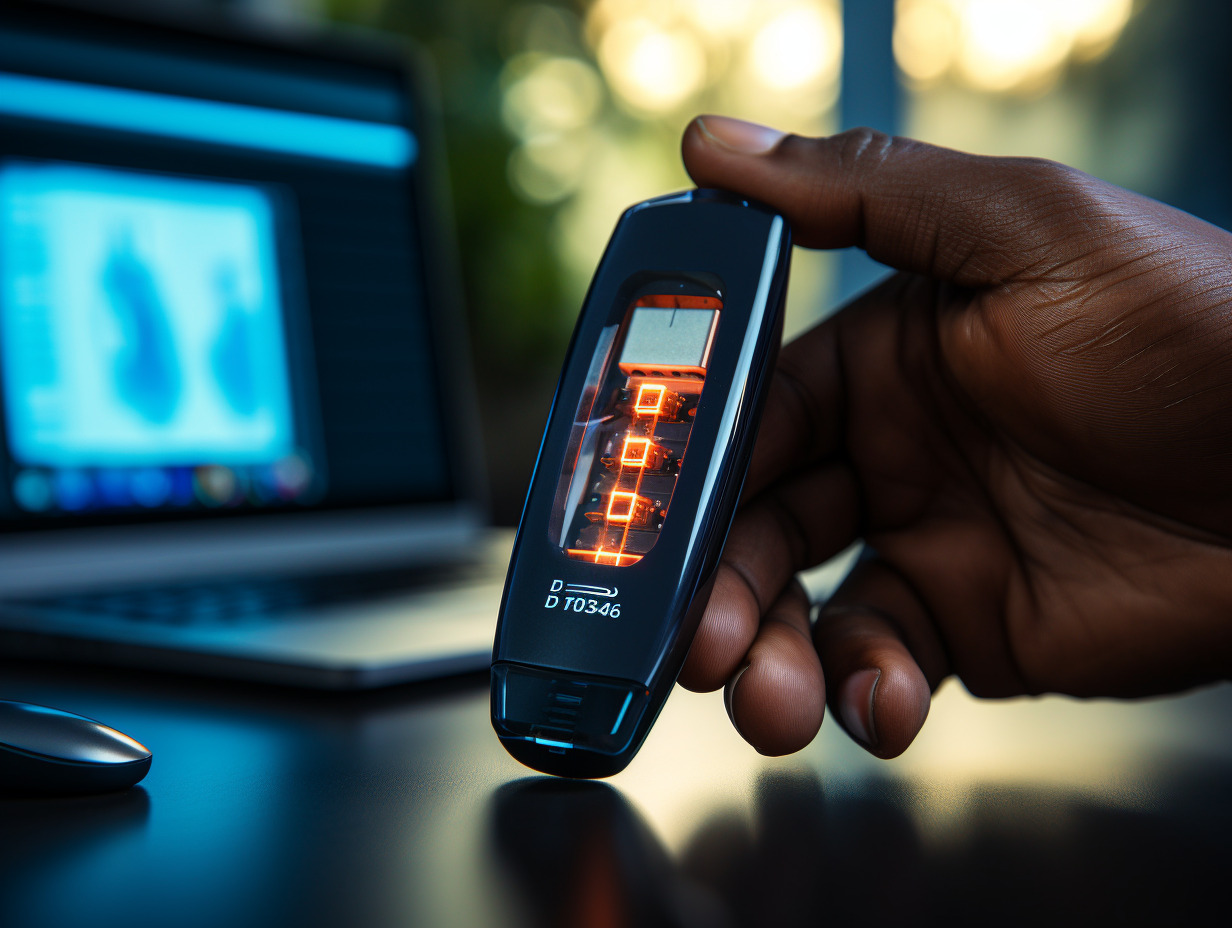
Using the USB dongle to enhance cybersecurity
In a world where cybersecurity has become a central concern, USB security keys represent major assets for IT infrastructures. They serve primarily for authentication and protection against unwanted access. Solutions such as the SafeNet eToken 5110 and the CodeMeter CmStick play a decisive role in implementing multifactor authentication, thereby consolidating the verification of user identities.
The protection of software against illegal copying is also an area where USB dongles prove indispensable. For example, the HASP Key acts as a digital lock, revealing the functionalities of applications only to users equipped with the correct hardware device. The HASP Sentinel, in particular, enhances security by requiring a binary code exchange to unlock the software.
As for digital rights management, the CodeMeter CmStick excels in its ability to securely store thousands of licenses, preventing unauthorized distribution. Keys like the HASP Yubico or the Google Titan Security Key, which use advanced security standards and Bluetooth, respectively, offer additional protection through secure communication means. The Kensington Security Key adds a biometric layer, combining a fingerprint reader with a U2F security key for optimized defense against intrusions. These devices illustrate the increasing diversification and specialization of cybersecurity tools available, meeting the ever more complex demands of contemporary information systems.