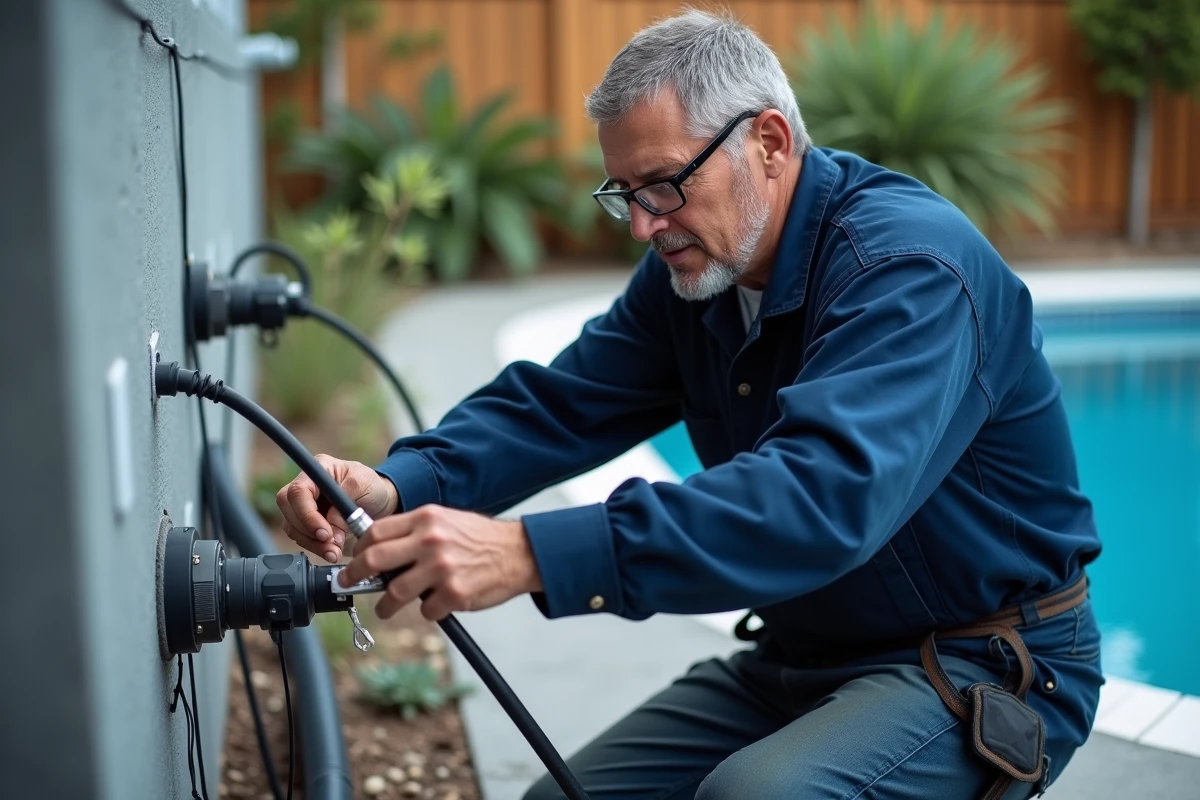
The section of an electric cable refers to the surface area of its conductive part, expressed in square millimeters. For a swimming pool pump, this parameter determines the conductor’s ability to carry current without excessive heating or detrimental voltage drop. An undersized cable causes energy losses, circuit breaker trips at startup, and, in the most severe cases, a fire risk in the technical room.
Starting inrush current: the factor that theoretical calculations often overlook
A swimming pool pump does not consume a constant current. At startup, the motor draws a current significantly higher than its nominal rating, sometimes several times the value indicated on the nameplate. This peak lasts for a few seconds, but it is enough to cause a voltage drop in the cable if the section is too small.
Variable speed pumps, increasingly common, have specific starting profiles. Their electronic speed controller partially limits the inrush current, but the technical manuals of several manufacturers still recommend sizing the cable section slightly larger than calculations based solely on nominal power. This margin also accounts for the aging of connections and the gradual oxidation of terminals in humid environments.
Knowing which cable section for pool power supply is suitable for your installation therefore requires not limiting oneself to the displayed power, but integrating this inrush current into the sizing.
Voltage drop and cable length: the calculation that many neglect
The electrical resistance of a conductor increases with its length. In a typical domestic installation where the main panel is a few meters from the devices, the loss remains negligible. For a swimming pool, the distance between the electrical panel (or the secondary panel in the technical room) and the pump often exceeds several dozen meters.
The NF C 15-100 standard requires that the voltage drop does not exceed a defined threshold between the circuit’s origin point and the receiver. Beyond this, the pump motor receives insufficient voltage: it heats up more, loses efficiency, and ages prematurely.
The calculation is based on three interrelated variables:
- The power of the pump (in watts), which determines the current flowing through the cable. The more powerful the pump, the higher the current, and the larger the section must be.
- The total length of the cable (round trip), often underestimated because the actual route through buried conduits, bends, and rises in the technical room is forgotten.
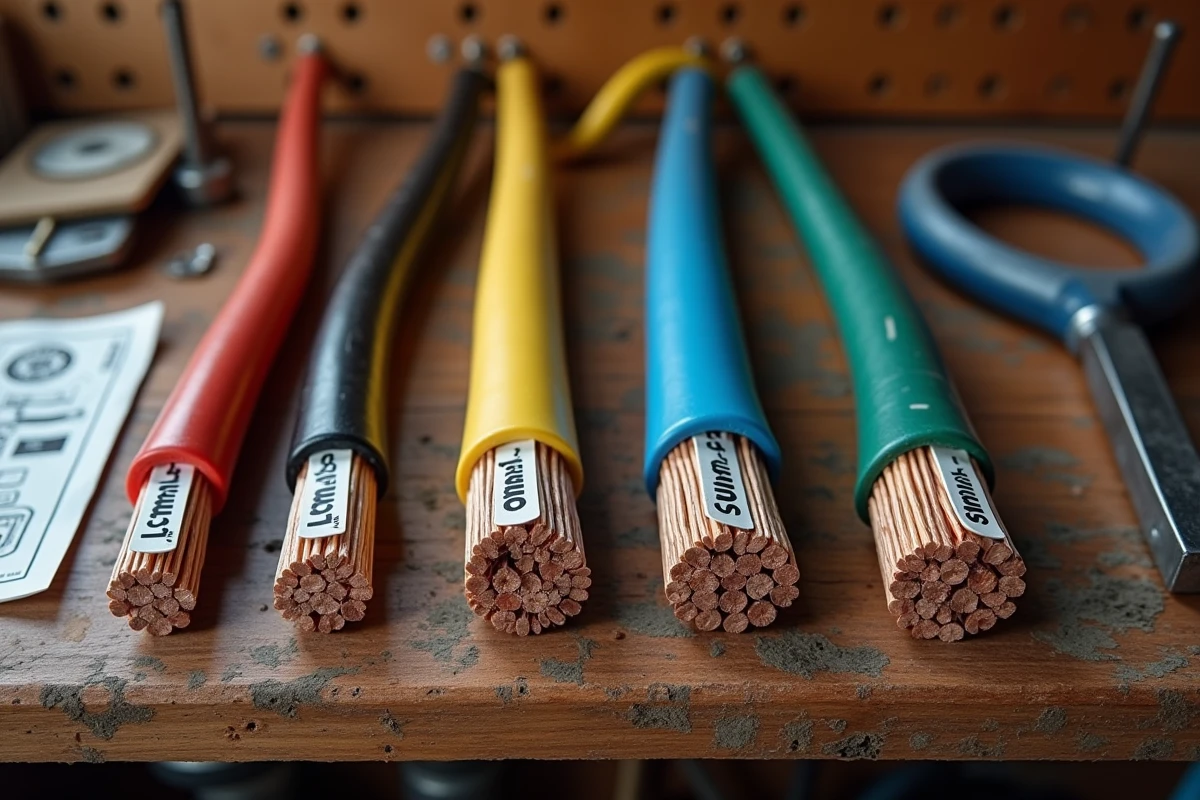
- The section of the copper conductor, the only lever to compensate for a significant distance at a given power.
For a distance of several dozen meters, moving up to the next section compared to the regulatory minimum is not a comfort issue; it is a technical necessity. A 2.5 mm² cable acceptable over ten meters can become insufficient over forty or sixty meters for the same pump.
Residual current protection and coordination with the circuit breaker
The cable section is not chosen in isolation. It forms a coherent set with the rating of the circuit breaker that protects the circuit and the associated residual current device. Recent amendments to the NF C 15-100 standard remind us that circuits supplying pool equipment must be protected by a dedicated 30 mA residual current device.
This requirement has a direct consequence on sizing. The coordination between the circuit breaker’s tripping curve, its rating, and the cable section must allow the cable to withstand the maximum current permitted by the protection without abnormal heating. If the section is undersized relative to the circuit breaker’s rating, the cable may heat up before the protection cuts off the circuit.
Home insurance reports also indicate an increase in claims related to undersized cables in the technical rooms of private pools. The chronic heating of a conductor that is too thin eventually degrades the insulation, creates hot spots at connections, and can lead to a fire, often years after the initial installation.
Rigid or flexible cable, single or multi-conductor: which type for the technical room
Beyond the section, the type of cable matters. In humid environments like a pool technical room, the cable must withstand water splashes, condensation, and sometimes corrosive treatment products.

- The R2V type cable (rigid, sheathed) is suitable for fixed cable trays and buried conduit runs. Its PVC insulation withstands the mechanical stresses of burial.
- The flexible H07RN-F cable offers better resistance to repeated bending and moisture. It is often recommended for the final connection in the technical room, where the cable undergoes handling during maintenance.
- The earth connection (green-yellow conductor) must be present and have a section at least equal to that of the active conductors. In pool environments, the equipotential bonding connects all accessible metallic elements to avoid any dangerous potential difference.
A cable suitable for the inside of a dry dwelling may not be appropriate for the technical room. The humid environment and temperature fluctuations require more robust insulation than that of a simple domestic wire.
The correct sizing of a swimming pool pump cable relies on the combination of four parameters: motor power, inrush current at startup, actual cable length, and the rating of the associated protection. Neglecting any one of them weakens the entire installation. In case of doubt about the necessary section, a qualified electrician remains the best guarantee of sustainable compliance with the NF C 15-100 standard.