
Burning 1000 calories in a single hour represents a threshold that many practitioners aim for without always measuring what it truly implies. The caloric expenditure displayed on a smartwatch or cardio machine depends on many parameters, and the gap between the promise and reality is often wider than one might think. This article compares the most commonly cited activities, confronts their figures, and identifies the variables that can shift the results.
Reliability of Caloric Estimates: What Sensors Really Measure

Before ranking the activities, a preliminary question must be asked: are the data on which the entire discourse is based reliable? A study from Stanford University (Shcherbina et al., 2022) compared several smartwatches and showed that the estimation error of energy expenditure can exceed 20% during intense efforts like HIIT or fast running.
Garmin and Polar specify in their technical documentation that their algorithms provide “approximations,” the reliability of which decreases when heart rate varies rapidly. During intervals, wrist optical sensors struggle to keep up with transitions. A display of 1000 kcal at the end of a session may therefore correspond to a significantly lower actual expenditure.
This margin of error changes the interpretation of all activity rankings. When one sport theoretically displays 800 kcal/h and another 1000, the actual difference may be nearly zero or reversed. To approach a target as high as 1000 calories in 60 minutes, one must know how to burn 1000 calories a day by combining the right levers of intensity and duration.
Caloric Expenditure by Activity: Comparative Table
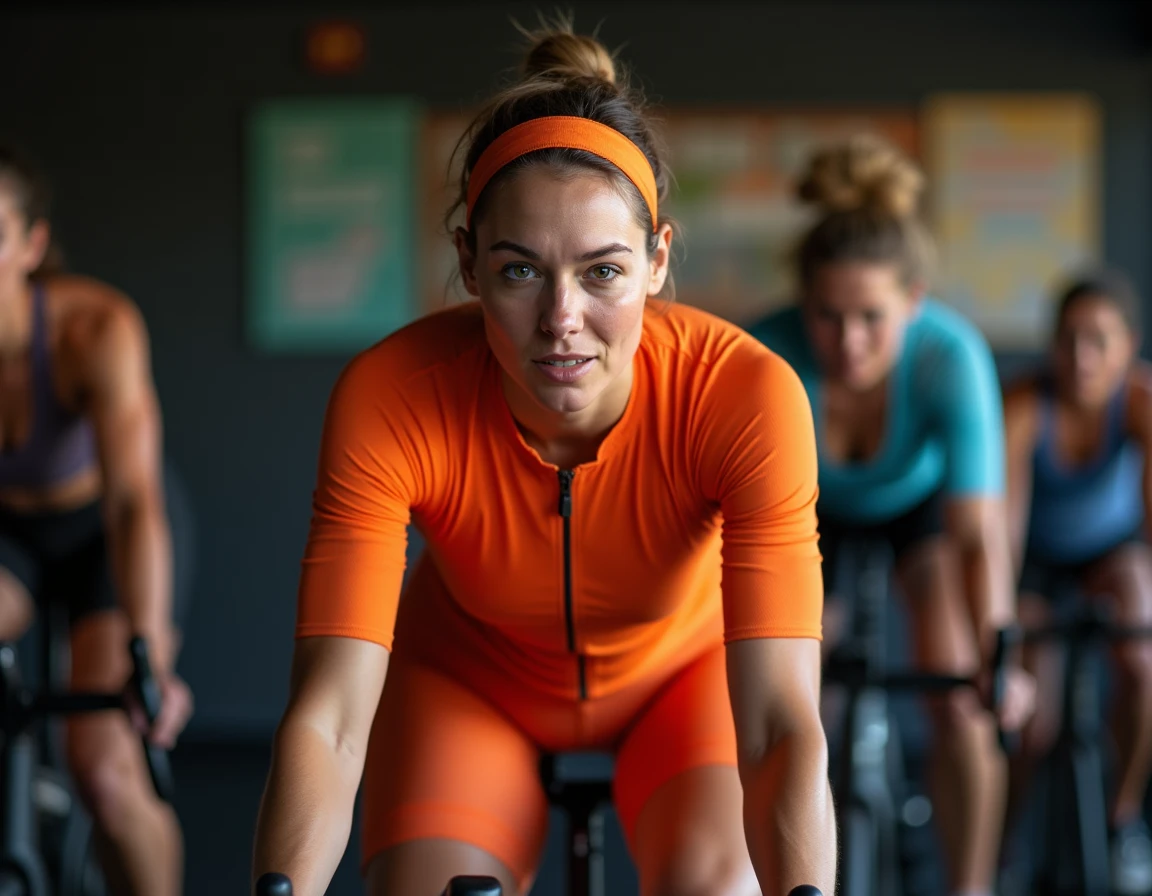
The values below come from the ranges cited by specialized sources. They correspond to an average-sized person, at a sustained intensity maintained for one hour.
| Activity | Estimated Expenditure (1 h, high intensity) | Accessibility |
|---|---|---|
| Running (fast pace) | 600 to 900 kcal | High (no equipment) |
| Jump rope | 700 to 1000+ kcal | High (rope only) |
| HIIT / interval training | Variable, often overestimated by sensors | Medium (technique required) |
| Swimming (sustained crawl) | 500 to 700 kcal | Medium (pool access) |
| High-intensity cycling | 600 to 800 kcal | Variable (bike, terrain) |
Jumping rope stands out: it is one of the few activities where the theoretical expenditure reaches 1000 kcal in an hour. The problem is that maintaining a high jump rope pace for 60 continuous minutes requires an advanced athletic level. Most practitioners need to break it up, which reduces the total expenditure.
Running remains the most documented choice. However, reaching the high end (900 kcal) requires a sustained pace that only trained runners can maintain for a full hour.
Individual Variables That Modify Actual Expenditure
The ranking above provides a trend, not a promise. Three factors significantly vary expenditure, sometimes more than the choice of activity itself.
- Body weight: at the same intensity and duration, a heavier person burns more calories than a lighter person, as the energy cost of movement increases with the mass to be moved.
- Body composition: a high muscle-to-fat ratio increases the basal metabolism and expenditure during effort. Two people of the same weight do not achieve the same result.
- Training level: a trained body becomes more efficient, which paradoxically means it burns fewer calories for the same effort. A beginner may expend more on a given exercise but will not be able to maintain the intensity long enough.
These variables explain why the published ranges are so wide. A difference of several hundred calories between two individuals performing the same activity at the same pace is common.
HIIT and Afterburn Effect: Often Overestimated Expenditure
HIIT (high-intensity interval training) is regularly presented as the most effective method for burning maximum calories. The main argument relies on the afterburn effect (EPOC): after an intense session, metabolism remains elevated for several hours, adding to post-exercise expenditure.
This phenomenon is real, but its magnitude is often inflated. The additional post-training expenditure represents a modest bonus compared to the calories burned during the session itself. HIIT has another pitfall: smartwatches greatly overestimate expenditure during intervals due to the rapid heart rate variations that optical sensors do not track accurately.
HIIT remains an effective training lever for improving cardiovascular capacity and body composition in the long term. However, considering it a shortcut to 1000 kcal per hour relies on figures that are less solid than they appear.
Cardiovascular Risks: What Health Authorities Recommend
Aiming for a caloric expenditure of 1000 kcal in one hour involves an effort classified as “very vigorous.” The European Society of Cardiology (ESC), in its 2020 guidelines, recommends a gradual increase in intensity and emphasizes that very vigorous sessions in sedentary individuals increase the risk of cardiac events, especially without prior stress testing.
The French High Authority of Health (HAS) echoes this sentiment. Before seeking to maximize caloric expenditure, a medical evaluation of risk factors is recommended, especially beyond 35 years or in the presence of a history.
A goal of 1000 kcal per hour is not a starting point. It is a threshold that assumes several months of prior training, documented progression, and recovery monitoring.
The key takeaway is not the number displayed on the watch, but the margin of error that accompanies it. With over 20% possible imprecision on the most common sensors, the only certainty is that the effort must be intense, prolonged, and tailored to the individual profile.
The choice of activity matters less than the ability to maintain it at high intensity over time, which brings the question back to a subject of progressive training much more than a ranking of disciplines.