
The Ryobi electric planer is available in two cordless models in the ONE+ 18 V range, and their specifications are not interchangeable. The R18PL-0 has a maximum cutting depth of 1.6 mm at 11,000 rpm, while the RPL18-0 reaches 2 mm at 14,000 rpm.
So before judging the brand’s performance, you need to know which model you’re using. This article compares the practical differences between the two models, assesses how they handle, and looks at the true cost for anyone who doesn’t already own a ONE+ battery.
R18PL-0 vs. RPL18-0: technical differences at a glance
Both planers use the ONE+ 18 V platform, but their specifications differ on the features that matter most when planing.
| Feature | R18PL-0 | RPL18-0 |
|---|---|---|
| Max. cutting depth | 1.6 mm | 2 mm |
| No-load speed | 11,000 rpm | 14,000 rpm |
| Rabbeting capacity | 12.5 mm | 12.5 mm |
| Chip ejection | Dust bag + adapter | Left or right + parking foot |
| Sales format | Bare tool (battery not included) | Bare tool (battery not included) |
Both models have the same rabbeting capacity of 12.5 mm. This determines the depth of side rebates for woodworking joints, and neither model has an advantage here.
The higher speed of the RPL18-0 (an extra 3,000 rpm) produces a more even finish on hardwood. Its additional 0.4 mm cutting depth also means fewer passes on a thick edge. On soft pine, however, the difference is less noticeable.
A detailed Ryobi electric planer review shows how these differences play out in real-world conditions, including on different wood species and with batteries of varying capacities.
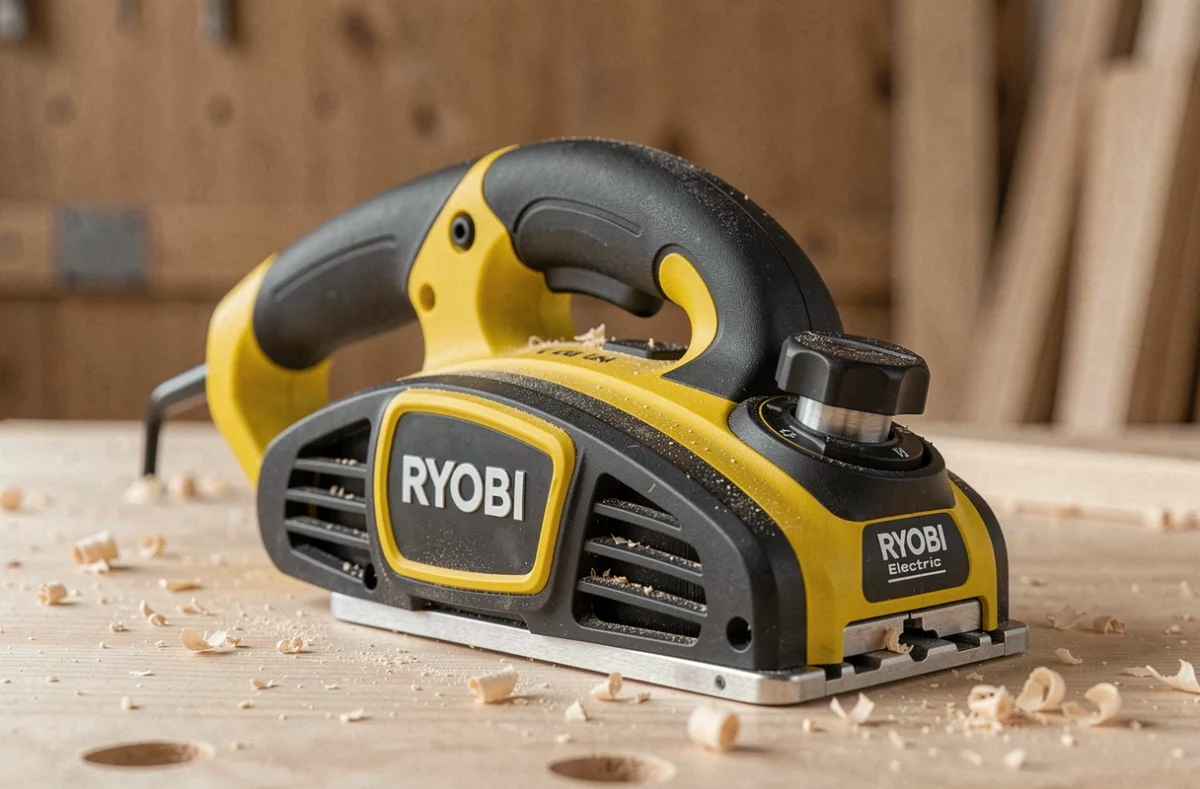
Included accessories and handling of the Ryobi planer
Handling is about more than weight or handle shape. The accessories included with each model also affect the day-to-day experience.
What’s in the R18PL-0 box
The R18PL-0 comes with a side fence, a dust bag, a dust extraction adapter, and two reversible blades. The side fence attaches to the planer and keeps it at a consistent distance from the edge of the workpiece, making it easier to cut rebates without marking them out first.
The dust bag, however, fills up quickly when making deep cuts. Connecting the extraction adapter to a workshop vacuum solves the problem, but means managing a hose while planing.
What the RPL18-0 adds
The RPL18-0 also comes with reversible blades and a fence, but adds two notable features. Chip ejection can be directed to the left or right depending on your working position. A retractable parking foot protects the blades when you set the planer down on the workbench, helping prevent damage to the cutting edge or work surface.
This foot may seem like a minor detail on a product page. In practice, it changes the pace of work: you can set the planer down between passes without balancing it on its side or risking a gouge in the workbench.
True cost of a complete kit without a ONE+ battery
Both models are sold as bare tools, without a battery or charger. If you already own ONE+ 18 V tools, there’s no extra cost, since any battery in the range (from 1.5 Ah to 9 Ah) fits both planers.
For first-time buyers, the calculation is different. You’ll need to add the cost of a battery and charger, which can amount to as much as the planer itself. The complete kit can cost twice as much as the bare tool, a detail that product listings rarely highlight.
- 2 Ah battery: limited runtime, but enough for occasional small adjustments in softwood
- 4 Ah battery: a common middle ground, allowing several linear metres of planing without stopping
- 5 Ah or higher: needed for longer jobs or hardwood, but adds weight to the tool
Actual runtime depends on the wood species, cutting depth, and battery capacity. Manufacturer figures on this point are only indicative and don’t replace measurements taken in real-world use.
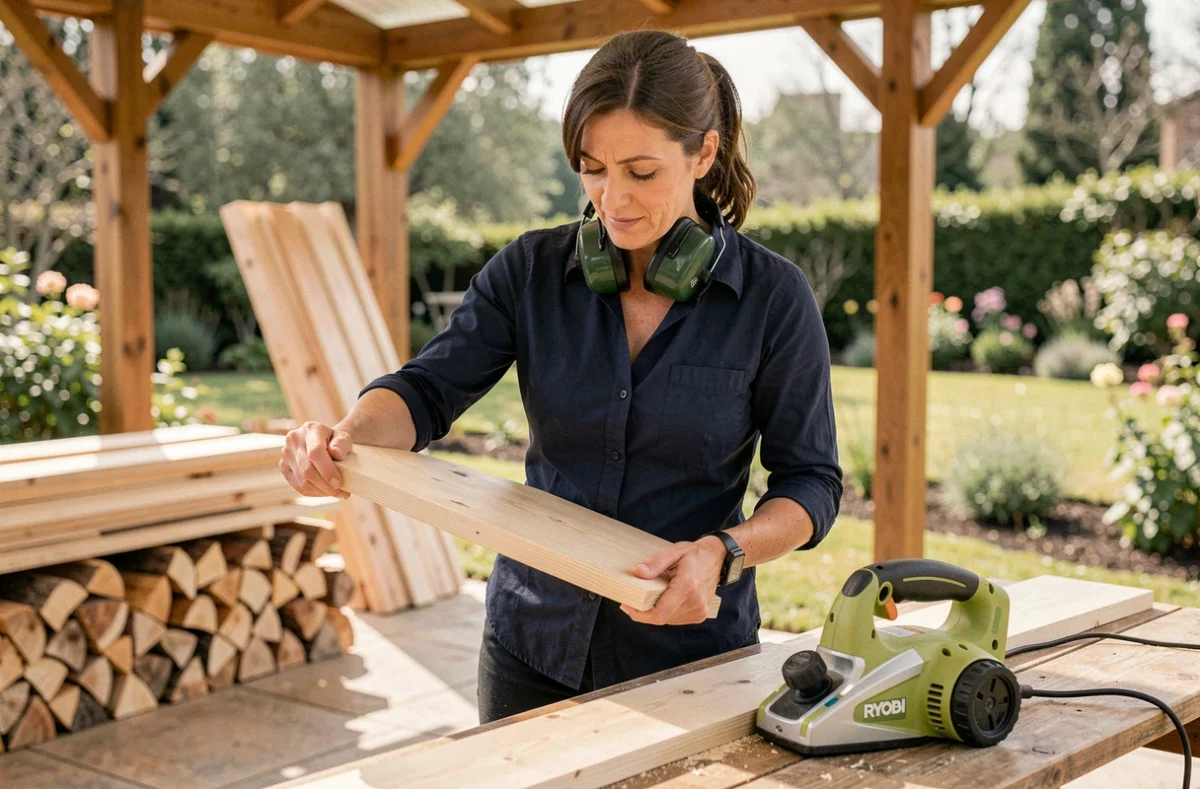
Cordless or corded Ryobi planer: which one suits your needs?
Choosing between a cordless and corded planer isn’t just about raw power. Cordless mobility is ideal for on-site adjustments, where running an extension cord to a door that needs planing isn’t always practical.
In a fixed workshop, a corded planer delivers consistent power without relying on battery charge. For longer runs—such as planing several oak boards—a corded model avoids charging breaks that interrupt the work.
The Ryobi ONE+ planer makes the most sense as part of an ecosystem. If your drill, circular saw, and sander already use the same battery platform, adding the planer costs only the price of the bare tool. Otherwise, it’s worth comparing the cost of the complete kit with that of a corded planer offering similar power.
Cutting depth and finish: where are the limits?
With a maximum cutting depth of 1.6 mm (R18PL-0) or 2 mm (RPL18-0) per pass, these planers are designed for fitting and finishing work. Planing several centimetres off a rough-sawn board would require an impractical number of passes on battery power.
A stationary thickness planer is the right tool for heavy stock removal. The Ryobi planer excels at touch-ups: trimming a door edge, chamfering an edge, or levelling a glued joint that stands proud by a few tenths of a millimetre.
The R18PL-0 is sufficient for light adjustments in softwood. The RPL18-0, with its higher speed and greater cutting depth, is the better choice for denser wood species or larger surfaces. The price difference between the two bare tools is modest, and the added versatility makes the RPL18-0 the stronger choice if you’re buying just one.