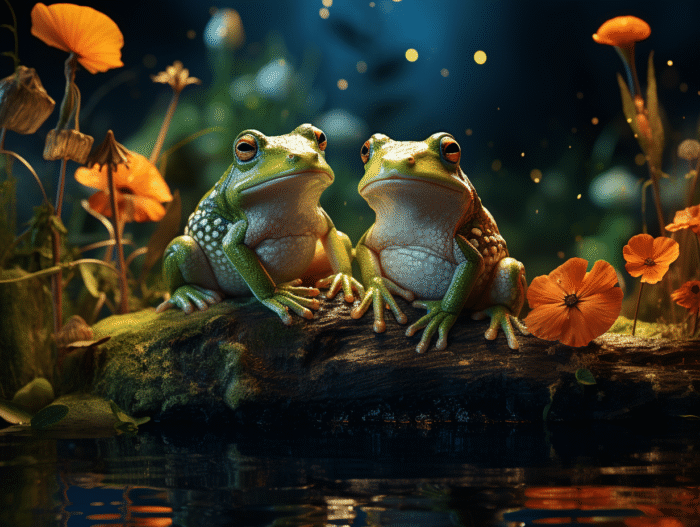
When the veil of night envelops nature, a strange concert rises from the freshwater expanses and marshes. It is the amphibians, notably toads and frogs, that raise their voices. Their nocturnal croaks, although similar in appearance, conceal subtle differences. These vocalizations play a fundamental role in their survival and reproduction, but they also reflect their biological and behavioral particularities. The study of these night hymns reveals fascinating nuances between these two close cousins and unveils the secrets of their enchanting communication.
Understanding Nocturnal Croaking: Ecology and Behavior
At night, the marshes and ponds come alive with a particular symphony: the nocturnal croaking. Within this orchestra, toads and frogs take center stage. Discover the differences between the toad and the frog through listening as well as observing their behavior. These amphibians, although closely related, have their own strategies for reproduction and survival. Frogs, belonging to the genus Rana and the family Ranidae, multiply their vocalizations during the breeding season to attract females, while toads, of the genus Bufo, rely on a less vocal approach.
The amphibian skin is an indicator of these differences. Toads defend themselves with rough skin, often equipped with glands secreting venomous substances, a defense mechanism against predators such as herons, crows, or hedgehogs. Frogs, on the other hand, opt for escape thanks to their smooth skin and agility. These physical characteristics are closely correlated with the communication and reproduction tactics of these pond animals.
Exploring amphibian eggs offers another angle of analysis. Frogs lay gelatinous masses of eggs that remain on the water’s surface or attach to aquatic vegetation, while toads exhibit varied laying behaviors. Some species, like the midwife toad (Alytes obstetricans), have a unique reproductive mode where the male carries the eggs until they hatch. These nuances between species testify to the richness of amphibian ecology and highlight the need to protect these complex natural environments.
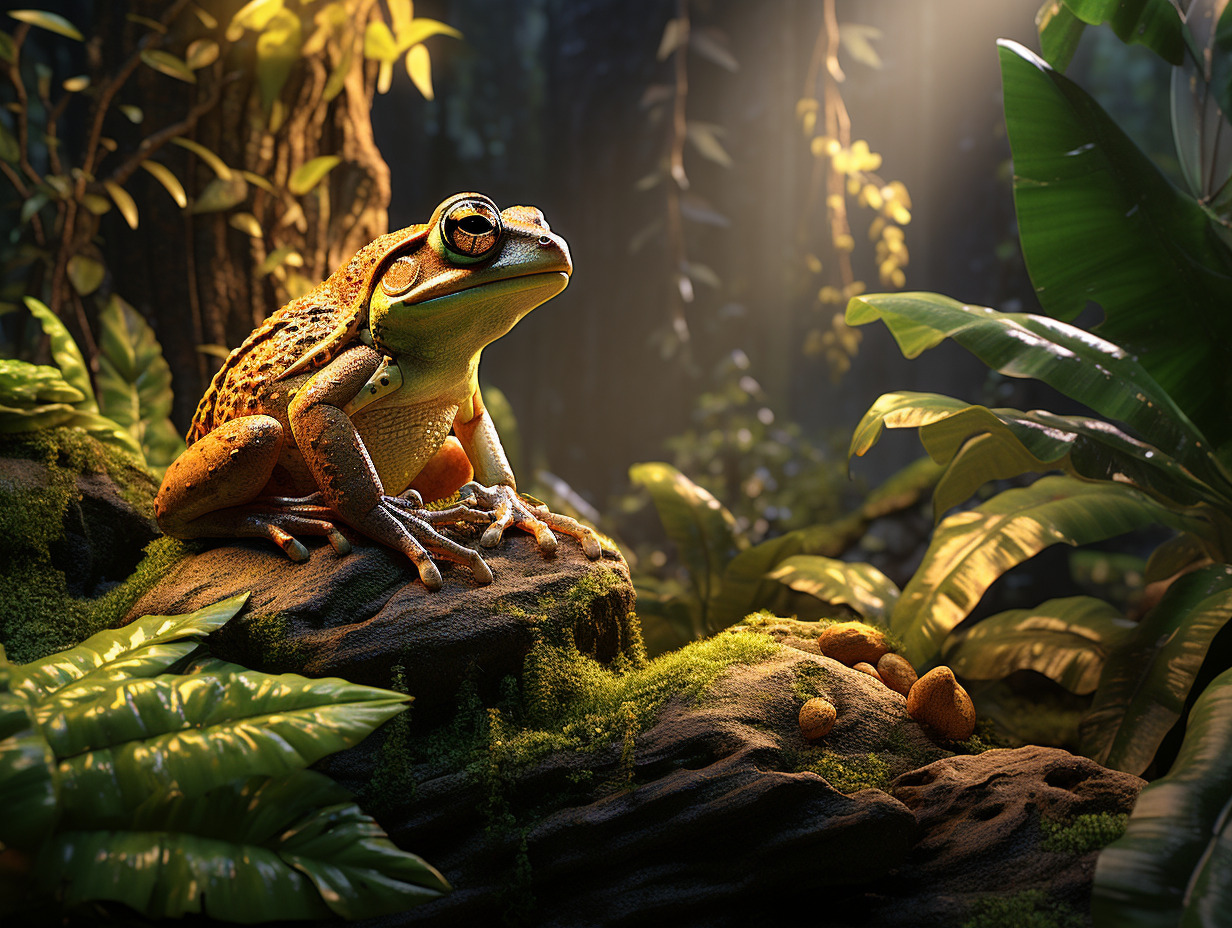
Comparative Study: Sound Communication in Frogs and Toads
The croaking of frogs and the calls of toads constitute the iconic soundtrack of nocturnal aquatic environments. The notable differences between these two groups of amphibians reflect specific evolutionary adaptations. Frogs, particularly those from the family Ranidae and the genus Rana, utilize a wide range of vocalizations during the breeding season to attract females. Their croaks are often high-pitched and powerful, designed to carry over long distances.
In contrast, toads from the family Bufonidae and the genus Bufo are distinguished by deeper and less sonorous calls. Sound communication in these species, while present, is less central to their reproductive strategy. For example, the Alytes obstetricans, commonly known as the midwife toad, displays atypical reproductive habits where the male carries the eggs, making croaking less fundamental.
The study of amphibians highlights the diversity of seduction techniques. The female frog is generally sensitive to the frequency and complexity of the song emitted by males. In contrast, although less dependent on sound communication, toad species such as Rhinella marina, known as the cane toad, sometimes use specific calls to gather or during intrasexual competition.
Thus, the Ranidae and the toad illustrate two distinct strategies for using sound. Frogs and toads, through their behaviors and habitats, provide us with an open window into the evolution of communication in anurans. While frogs prioritize croaking for reproduction, toads expand their behavioral repertoire, relying on other signals and interactions. This diversity among amphibians reflects the extraordinary adaptability of these species in response to environmental and reproductive constraints.