Transforming a motorcycle into a trike is not just about bolting a conversion kit onto an existing frame. The choice of rear axle, chassis-transmission compatibility, and French homologation constraints create cost discrepancies that most online quotes do not detail.
Geometry of the Rear Axle and Chassis Constraints on Trike Conversion Costs
The most significant budget item is the type of rear ground connection. A rigid axle kit (beam axle type) remains the least expensive solution, but it imposes a fixed wheelbase that radically alters cornering behavior. Independent suspension kits (IRS), offered by manufacturers like Hannigan or Roadsmith, provide wheel travel that better preserves comfort and traction, at a significant additional cost.
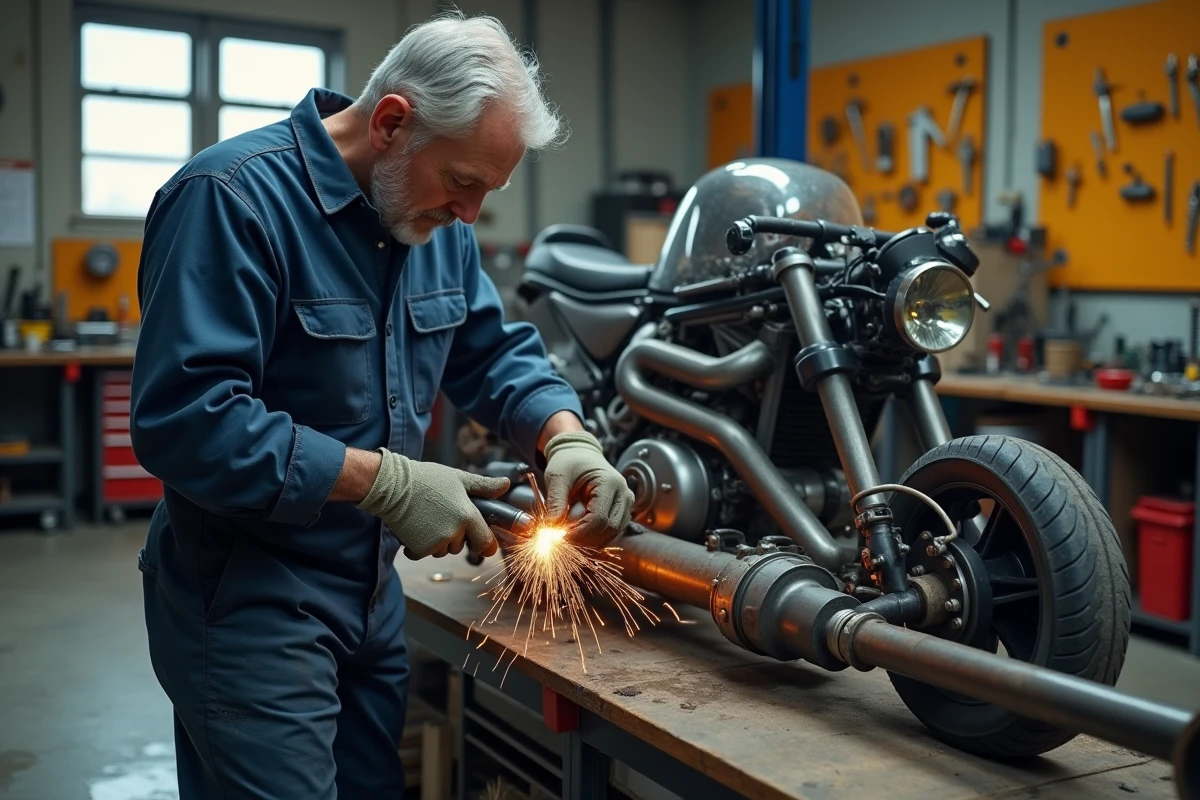
We observe that chassis-kit compatibility often generates unanticipated adaptations to the initial quote. On a Harley-Davidson Touring, the rear cradle accepts most kits on the market without welding. On an older Honda Gold Wing, it may be necessary to modify the swingarm mounting points, adding several hours of workshop time.
To estimate the cost of transforming a motorcycle into a trike, it is essential to factor in from the start the type of rear suspension, the brand of the kit, and the model of the motorcycle, as these three variables can double the bill.
Homologation and Trike Registration in France: Administrative Costs to Budget
A trike converted in France must undergo a single vehicle approval (RTI) with the DREAL. This procedure verifies the compliance of the transformed vehicle with safety standards, and its cost varies according to the complexity of the technical file to be provided.
The RTI file requires a control report issued by an accredited laboratory. It must include the resistance calculation notes for the modified chassis, the braking diagram (an independent circuit for each rear wheel is generally required), and the manufacturer’s certificate for the kit.
- DREAL file fees and laboratory testing, which often represent an underestimated cost in workshop quotes
- Modification of the registration certificate: the vehicle changes category (from MTL to TM or CL), leading to new registration and recalculated registration fees
- Specific trike insurance: some insurers refuse to cover a transformed vehicle without an RTI certificate, while others apply a surcharge related to the change of category
We recommend contacting your department’s DREAL before starting the work. Technical requirements vary from one regional directorate to another, and a refusal of homologation after conversion represents a real financial risk.
Physiological and Psychological Adaptation of Senior Riders to Trike Riding
Technical guides often overlook a crucial aspect: riding a trike does not engage the same reflexes as riding a motorcycle. The absence of leaning in curves destabilizes experienced riders, sometimes more than beginners. The brain must unlearn instinctive counter-steering, and this transition phase lasts several hundred kilometers.
For seniors, the main motivation for conversion is often related to physical limitations: joint pain in the hips or knees making it difficult to maintain balance at a stop, decreased leg strength to hold the motorcycle on a slope. The trike eliminates these constraints but introduces others.
The total weight of the vehicle increases significantly after conversion. The turning radius lengthens. In tight corners, the inner rear wheel can catch a curb or a median if the rider maintains their motorcycle trajectories. A trike handling course reduces the risk of accidents in the first weeks, and some specialized workshops include it in their service.
Fatigue and Posture on Long Journeys
The perceived comfort on a trike is paradoxical. The seating is more stable, but the vibrations from the rigid rear axle transmit more into the back than with a conventional motorcycle suspension. Riders suffering from lower back pain do not always find the relief they expect, especially with a non-suspended axle kit.
We advise testing a trike for at least half a day before finalizing the conversion. Several dealerships offer test rides, and this is the only reliable way to assess whether the posture suits your body type.

Trike Conversion Kit: Technical Criteria for Choosing Without Overpaying
The market for kits is structured around a few recognized manufacturers. Hannigan, Roadsmith, and Motor Trike cover most Harley-Davidson and Honda models. For less common brands, options become scarce and lead times extend.
- Transmission compatibility: a kit designed for a shaft drive (Honda Gold Wing) does not adapt to a belt drive (Harley Softail) without costly modifications
- Material of the rear body: fiberglass (lighter, cheaper) or aluminum (more durable, better rigidity)
- Integrated braking system: high-end kits include an independent hydraulic circuit for each rear wheel, with a brake distributor
- Loading capacity of the rear trunk, which varies significantly from one manufacturer to another and conditions its use for travel
An entry-level kit installed by a general workshop and a premium kit fitted by a certified specialist do not yield the same results, either in road handling or resale value. The price difference reflects the quality of the suspension, the finish of the body, and especially the structural warranty from the manufacturer.
The overall budget therefore depends less on the catalog price of the kit than on the compatibility between the motorcycle model, the level of service chosen, and the homologation fees specific to your administrative situation. Obtaining several detailed quotes, demanding separate pricing for each item (kit, labor, homologation, insurance), remains the most reliable method to avoid unpleasant surprises.