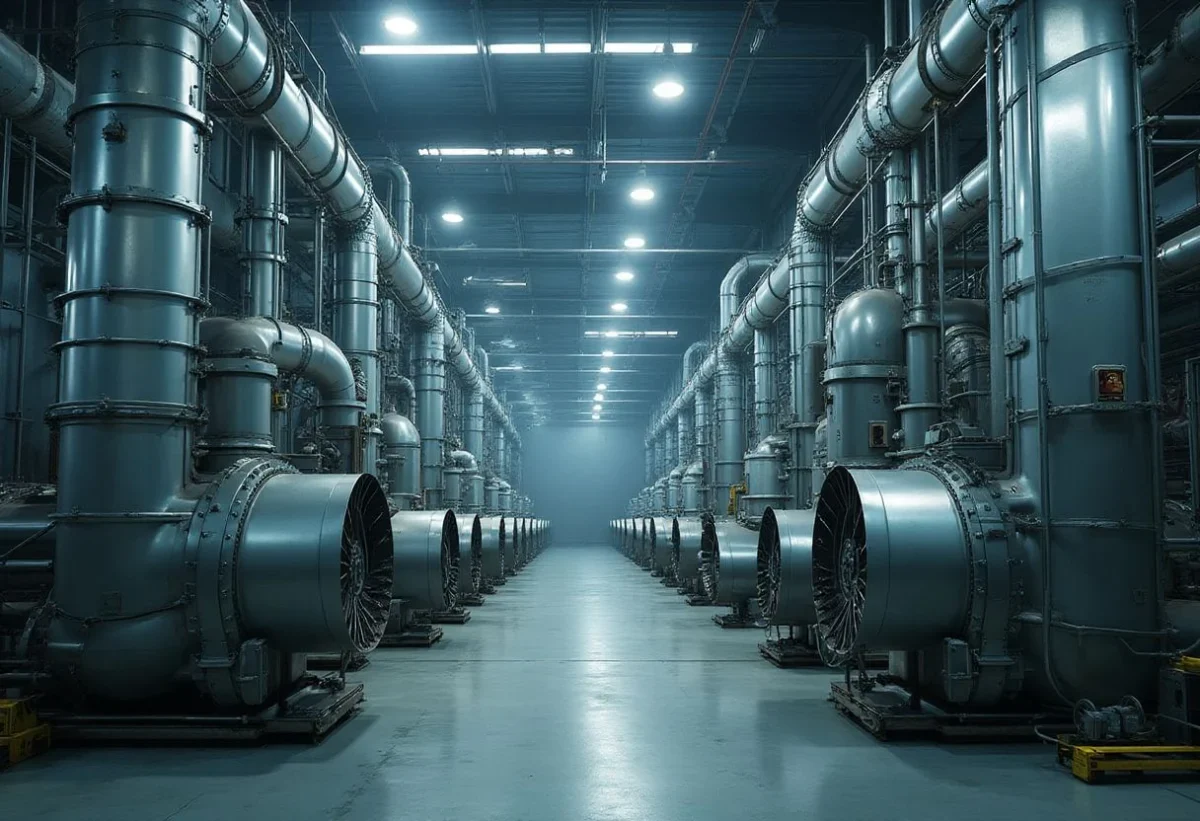
Ventilation in industrial buildings is crucial for maintaining a healthy and productive environment. Indeed, it not only allows for the removal of chemical pollutants but also regulates the temperature and humidity inside. In a context where energy consumption is a major issue, choosing the right ventilation system is essential. The concept of climate engineering is relevant here, as it aims to create comfortable and healthy indoor environments through intelligent heating, ventilation, and air conditioning (HVAC) systems.
Different ventilation equipment
Controlled mechanical ventilation (CMV)
Controlled mechanical ventilation (CMV) is a ventilation system that uses fans to ensure a constant renewal of air in a building. This system is particularly effective in ensuring optimal indoor air quality and is often used in humid rooms to prevent the accumulation of stale air.
Types of CMV: single and double flow
The single flow CMV works by extracting stale air from humid rooms, while the double flow CMV recovers heat from this air to warm the incoming air. This allows for energy savings while maintaining optimal thermal comfort within the building.
Air conditioning equipment
Air conditioning systems play a key role in controlling indoor temperature. Options include reversible air conditioning systems, which not only cool the air in summer but also heat it in winter. This contributes to increased energy efficiency of buildings while optimizing energy consumption.
Natural ventilation in buildings
Natural ventilation uses pressure differences and gravity to renew air in a building without relying on electrical energy. Although this method is economical, it largely depends on external climatic conditions. However, it can be optimized through specific techniques to improve air flow.
Air filtration equipment
To ensure excellent indoor air quality, ventilation systems can be equipped with filters to eliminate volatile organic compounds (VOCs) and other pollutants. Regular maintenance is crucial to maintain the efficiency of these systems.
The importance of indoor air quality
Impact on health and well-being
Indoor air quality directly affects the health and well-being of a building’s occupants. A healthy indoor environment can prevent various health problems and improve employee productivity.
Energy savings and energy efficiency
Modern ventilation systems are designed to optimize energy consumption while maintaining optimal indoor quality. This results in substantial energy savings and increased energy efficiency of buildings.
Choosing systems for a healthy environment
Choosing the right ventilation system involves considering various criteria such as the type of pollutants present, the volume of spaces to be ventilated, and of course, the available budget. It is essential to tailor the ventilation system to the specific needs of each building to ensure safety and energy efficiency.
Resources and useful links
PDFs and technical guides
For those wishing to deepen their knowledge and obtain more information on the subject, various technical guides and PDFs are available to provide feedback on best practices in industrial and ecological ventilation.
Companies specialized in HVAC
Collaborating with companies specialized in HVAC systems can offer customized solutions to optimize ventilation, air conditioning, and heating within industrial and residential buildings.
Considering all these aspects, it becomes clear that industrial and ecological ventilation plays an indispensable role in creating healthy, comfortable, and energy-efficient indoor environments.