The role of women in the automotive industry is not limited to a gallery of historical portraits. It encompasses a set of technical, industrial, and cultural changes that reshape the sector, from vehicle design to competition circuits.
Automotive Design Bias: When the Vehicle Ignores Its Female Drivers
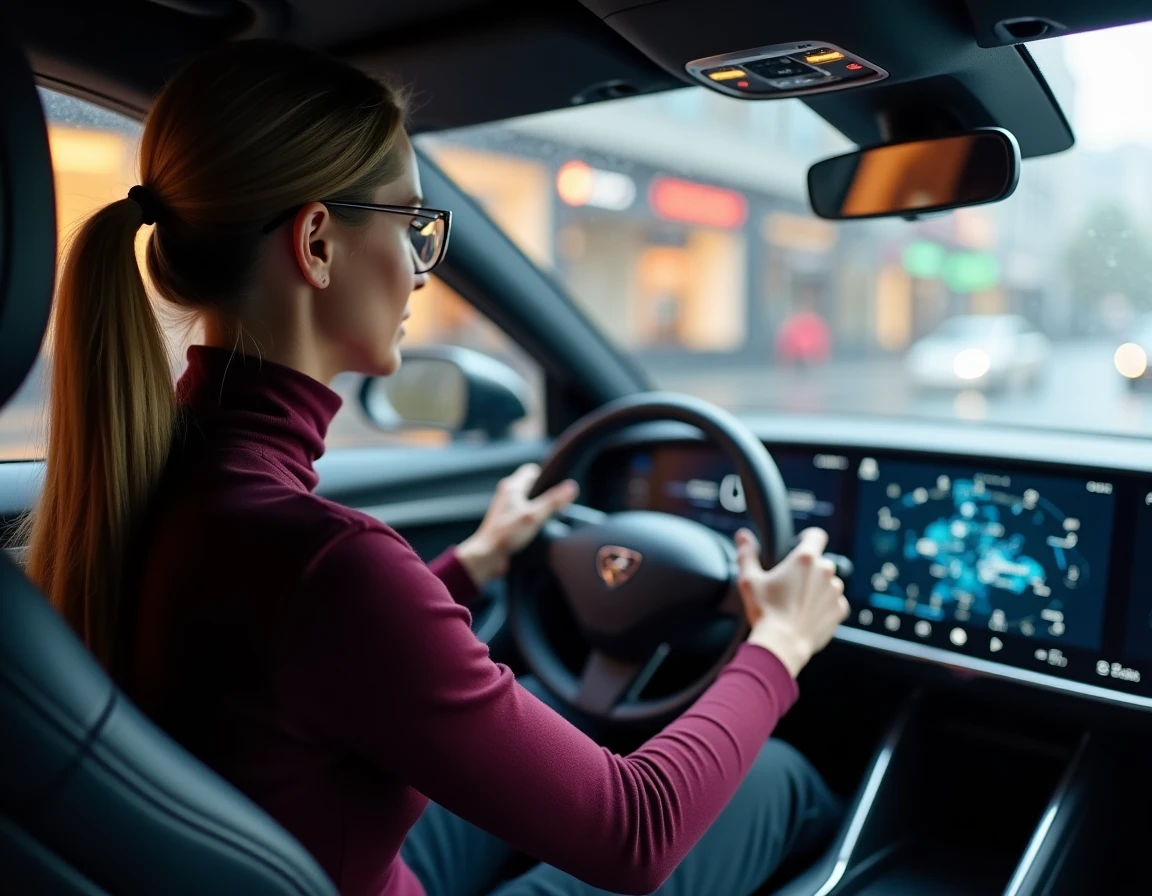
Road safety testing protocols have long relied on crash test dummies calibrated to an average male morphology. Seatbelt adjustments, airbag positioning, seat ergonomics: historically male test data have guided the design of safety devices for decades.
Recent work in ergonomics shows that this approach undermines the suitability of certain equipment for women. The distance to the steering wheel, the angle of the backrest, or the height of the headrest do not correspond to the same body types. Several manufacturers are now incorporating female dummies into their crash tests, but the generalization remains slow.
This design bias is not limited to passive safety. Driving interfaces, the size of steering wheel controls, and driver assistance systems rely on datasets where female drivers are underrepresented. Correcting this imbalance requires rethinking specifications from the research and development phase.
This implies having more women among the engineers and designers in positions. To discover Future au Féminin and the challenges of gender diversity in technical automotive jobs, the site is a useful resource.
Electric Transition and New Jobs: A Window for Gender Diversity in Automotive
The shift from internal combustion engines to electric and connected vehicles redefines the skills sought by manufacturers. Software, UX, data, and mobility services profiles are increasingly taking precedence over traditional mechanical and machining fields.
This restructuring opens up spaces less locked by decades of male recruitment. Training in embedded computing, artificial intelligence applied to autonomous driving, or electric fleet management attracts a more diverse pool than traditional mechanical engineering programs.
Gender diversity in these emerging jobs is not a symbolic goal. It has a direct effect on product quality:
- A diverse panel of female and male designers reduces the ergonomic blind spots reported in crash tests and onboard interfaces.
- Shared mobility services (car-sharing, ride-sharing, short-term rentals) become more relevant when their user journeys incorporate female usage patterns, often different, particularly perceived safety and multimodal trips.
- Assisted driving algorithms trained on more representative data produce more reliable models for all driving profiles.
The electric transition does not guarantee parity, but it creates a skills disruption that can redistribute the cards if recruitment follows.
Female Drivers and Motorsports: Beyond the Symbol
Motorsport remains one of the most visible spaces of imbalance between men and women in the sector. Female drivers rarely access the top categories of motorsport due to lack of funding, structural support, and suitable detection pathways.
Recent initiatives aim to correct this deficit. Driving academies reserved for young women now exist in several countries, and some teams are incorporating mentoring programs. The careers of drivers like Naomi Schiff or Bianca Bustamante demonstrate that talent is not lacking; it is the access structures that are missing.
What the Presence of Women in Racing Technical Teams Changes
Leena Gade was the first female race engineer to win the 24 Hours of Le Mans. Her role was not limited to a representative position: she piloted the refueling strategy and real-time decisions during the race.
This type of career shows that gender diversity in motorsport is not only played out behind the wheel. Track engineering, strategy, and sports management roles remain very underrepresented by women, even though they directly condition performance.
Representation of Women in the Automotive Industry: The Numbers of Delay
The proportion of women in the automotive industry in Europe hovers around one in five employees. In leadership positions, this proportion drops even further. Recent sector data from ACEA confirms a persistent underrepresentation in engineering, production, and industrial management roles.
Some notable appointments nuance this observation without reversing it. Linda Jackson, at the head of Peugeot, holds one of the few general management positions at a major automotive brand. These careers remain exceptions in a sector where the feminization is progressing slowly.
The most effective lever lies upstream: educational guidance, internships, visibility of technical jobs to middle and high school girls. Associations like Elles bougent organize meetings between students and professionals in the sector, particularly during the Mondial de l’Auto.
- Feminizing recruitment panels reduces selection bias for equal skills.
- Telecommuting and flexible hour policies, accelerated in recent years, facilitate access to technical positions for profiles that bear a double domestic burden.
- Internal women’s professional networks within manufacturers create promotion circuits parallel to historical informal male networks.
Women in automotive is not just a question of image or communication. Every uncorrected design bias and every technical position unfilled due to lack of candidates represents a measurable cost for manufacturers, in product quality as well as in commercial performance.