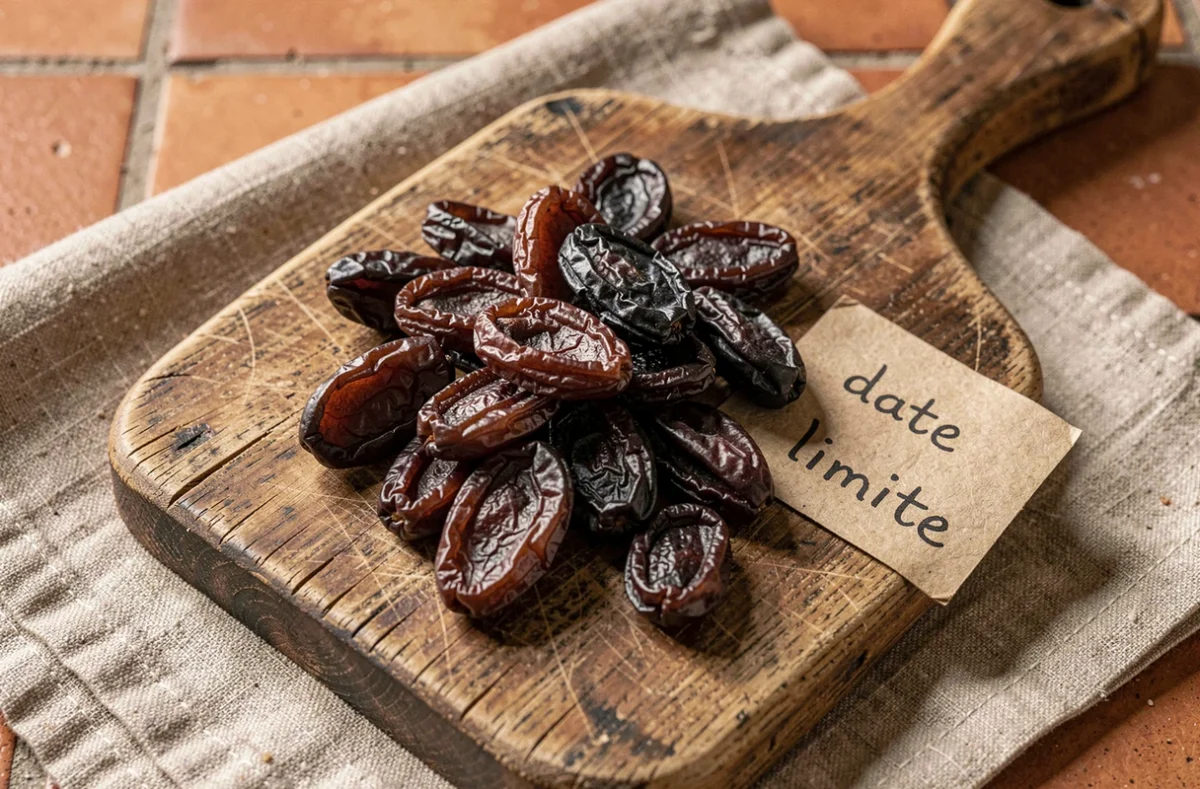
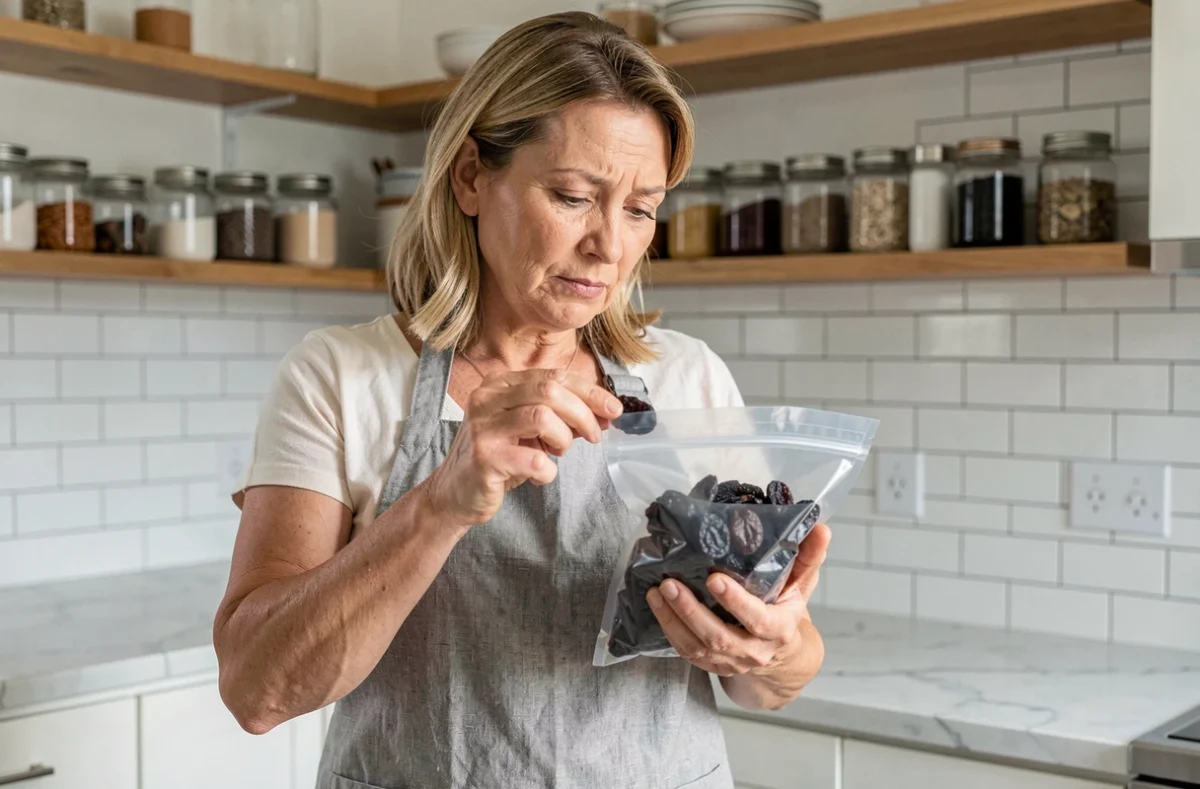
You find a bag of prunes at the back of the cupboard. The date printed on the packaging is several months past, and the question comes up: throw them away or try one? Prunes are dried fruit, and their reduced water content makes them much more stable than fresh fruit. The answer depends mainly on the type of date shown on the package and the conditions in which they were stored.
Best-before or use-by date on prunes: the distinction that changes everything
Most bags of prunes carry a best-before date, identified by the wording “best before.” This means the product may lose some of its flavor or texture after the date, but it does not pose a health risk if the packaging has remained intact.
A use-by date, on the other hand, applies to highly perishable foods that are vulnerable to microbial growth. You’ll find it on fresh meat, dairy products, and refrigerated meals. Standard prunes, which are dried and sealed in airtight packaging, do not fall into this category.
According to the DGCCRF, foods past their best-before date can be consumed safely, provided their packaging has not been damaged. To understand how long prunes keep after their best-before date, distinguishing between a best-before date and a use-by date is the first thing to do.
In practice, an unopened bag of dried prunes stored in a cool, dry cupboard remains edible well beyond its best-before date. Deterioration happens gradually: the prunes become harder and lose some of their mellow flavor, but they do not become toxic overnight.
Rehydrated prunes or dried prunes: two products, two shelf lives
Not all prunes sold in supermarkets are equally shelf-stable. One often-overlooked detail makes a big difference: the product’s moisture content.
Traditional dried prunes, which are thoroughly dehydrated, keep well over time. Their low water content slows the growth of microorganisms. However, some supermarket products are rehydrated prunes, with a moisture content of up to 35%. An Auchan product listing states that this type of prune should be refrigerated after opening and eaten within ten days.
A common mistake is to apply the same storage guidelines to both types. A soft, plump prune is not as stable as a firm, dry one. Before eating prunes past their date, check the label to see which type of product you have.
What the label on your package says
Rather than looking for a universal shelf life that applies to all prunes, the most reliable approach is to read the manufacturer’s storage instructions. These take into account the production method, residual moisture content, and type of packaging used.
- Dried prunes in an unopened bag packed in a protective atmosphere: the best-before date may be 12 to 24 months away, and the product can remain edible for several months beyond that date if the bag is intact.
- Rehydrated or soft prunes: shorter shelf life, refrigeration recommended after opening, and prompt consumption (within a few days to around ten days, depending on the manufacturer).
- Loose prunes without their original packaging: no reliable reference date; shelf life depends entirely on how they are stored at home.
Signs that prunes have spoiled: what to check before eating them
The date on the package is a useful guide, but the prunes themselves have the final say. Before eating a prune past its date, give it a quick sensory check.
Mold or sugar crystallization
A white coating on the surface is not necessarily cause for concern. A smooth, non-fuzzy white powder is often crystallized sugar and is harmless. By contrast, strands, fuzz, or green spots indicate mold. If you see any of these, throw away the contents of the bag without tasting them.
Smell and texture
A fermented, sour, or alcoholic smell indicates spoilage. A prune that has become unusually sticky or whose flesh feels abnormally tacky should also raise concerns. If there are no such signs, a dried prune that has hardened over time is still edible, even if its texture is less pleasant.
- Normal smell (slightly sweet and fruity): safe to eat.
- Fermented or sour smell: throw it away.
- Fuzzy surface: mold; do not eat.
- Smooth white surface with no unusual smell: sugar crystallization; no risk.
Storing prunes: conditions that help them keep longer
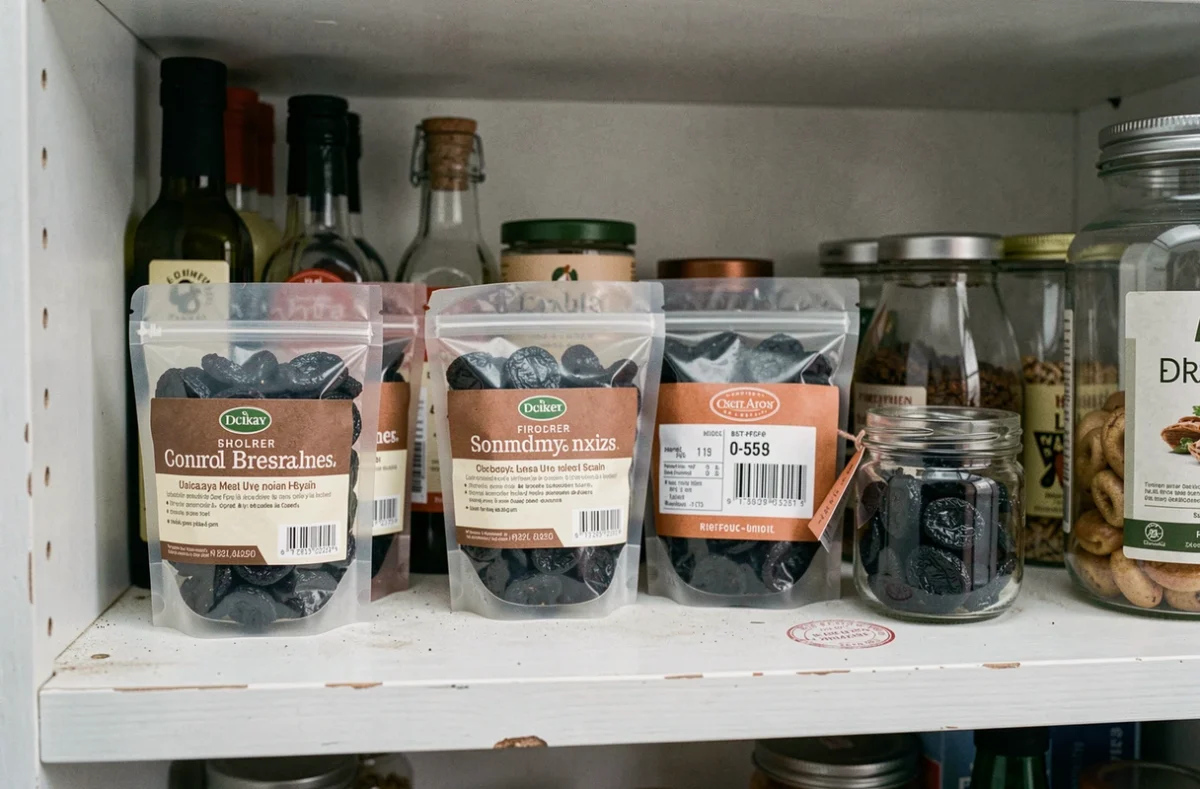
A kitchen cupboard away from light and heat is suitable for unopened dried prunes. Once the bag has been opened, an airtight container limits exposure to moisture and ambient odors.
Refrigeration is not always necessary for dried prunes. It is useful for rehydrated prunes or if the storage environment is hot and humid. Cold temperatures slow spoilage, but they cannot restore a product that has already gone bad: a prune showing signs of mold does not become safe to eat again in the refrigerator.
Freezing: a little-known option
You can freeze prunes to extend their shelf life, for example when preparing for a recipe. They will keep for several months in the freezer in an airtight bag. Thawing them in the refrigerator preserves their texture better than microwaving them.
Prunes that are a few months past their date, stored properly and showing no visible signs of spoilage, generally do not pose a health risk. Exactly how long they keep beyond the best-before date depends on the product’s moisture content, whether the packaging is intact, and the storage temperature. Checking their appearance and smell is still the most reliable test before eating prunes past their date.