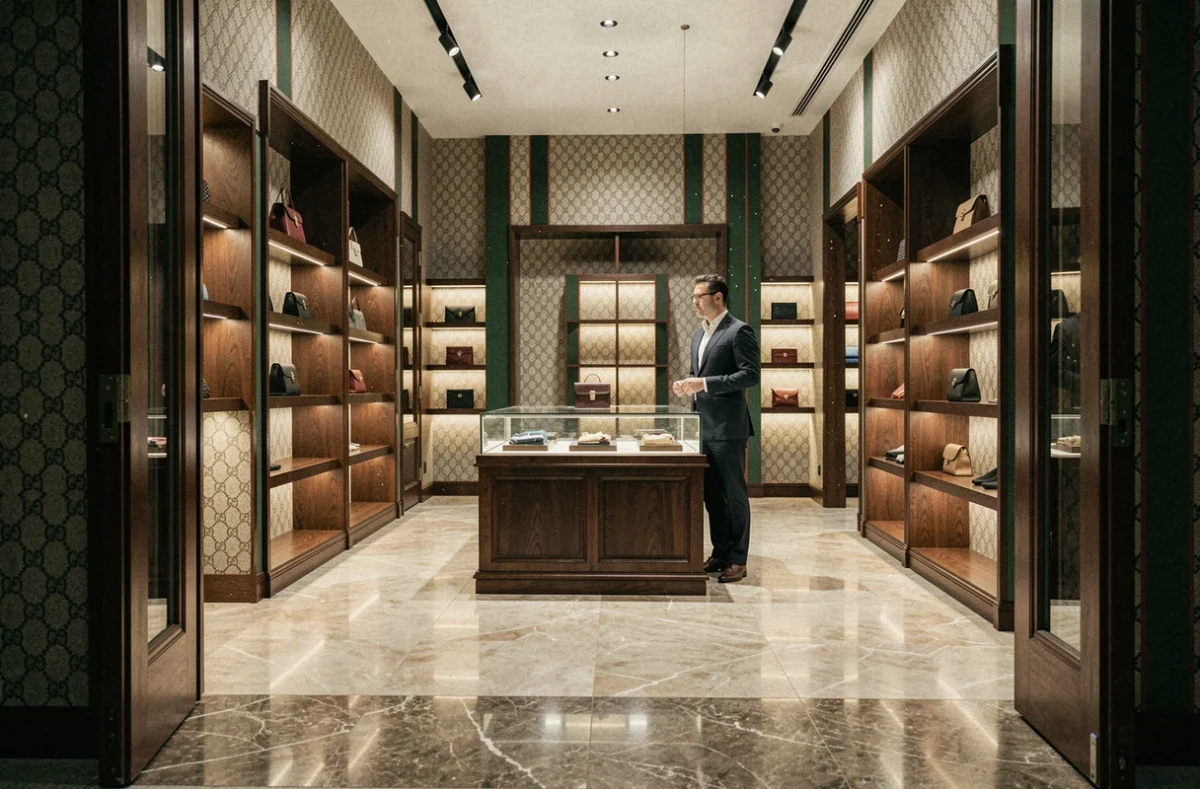
Looking at Kering’s quarterly results, one thing is clear: Gucci, which accounts for around half of the group’s revenue, has been unable to stabilize sales. In the latest third quarter, the Florentine fashion house was still reporting a decline in revenue, weighed down by weak demand in China and store traffic that has yet to pick up.
To understand Gucci’s struggles under François-Henri Pinault, we need to look beyond the creative side and examine what is going wrong commercially.
Gucci store traffic: the key indicator worrying Kering
There is plenty of talk about creative direction and collections that are too safe or too daring. On the ground, the problem looks different: customers who walk into Gucci stores are spending more, but the number of in-store visitors continues to fall.
This is a worrying sign. A luxury brand can increase its average transaction value through merchandising or by moving accessories upmarket. But bringing customers back into a store network requires sustained work on brand desirability, local marketing and the in-store experience.
Kering’s management has acknowledged that Gucci’s turnaround is being held back by precisely this decline in footfall. In other words, conversion rates in stores are improving, but the brand is no longer attracting enough people for that to show up in the overall figures. This points to a problem with brand image and cultural relevance, not simply the product.

Kering’s dependence on Gucci: why one brand’s crisis puts the whole group at risk
At LVMH, the underperformance of one fashion house is offset by the diversity of its portfolio. Kering’s structure is radically different. Gucci accounts for half of the group’s revenue, making every disappointing quarter for the Florentine label immediately visible in the consolidated accounts.
Kering’s revenue fell from €10 billion to €9 billion on a like-for-like basis, a decline of 11% largely attributable to Gucci. The group’s market capitalization has plunged from €97 billion to around €40 billion in four years. This concentration of risk in a single brand limits François-Henri Pinault’s room for maneuver.
To compensate, Kering has had to take unusual financial measures, including selling recently acquired real estate assets and taking on debt. The stated priority is no longer a return to short-term growth, but protecting profitability and improving operational efficiency.
Gucci’s turnaround strategy: wholesale and the Chinese market
Two operational levers deserve a closer look, as they reveal the concrete trade-offs facing management.
Wholesale: a risky shortcut
To boost volumes in the short term, Gucci appears to be relying more heavily on wholesale through third-party distributors. This channel can lift total revenue, but it creates a structural problem:
- Control over the brand image diminishes when products circulate through networks the fashion house does not fully control
- Margins are significantly lower than in directly operated retail, weighing on profitability
- A revenue rebound driven by wholesale does not mean an equivalent return in demand at Gucci stores, which remains the true measure of desirability
This may be a financial stopgap to get through a downturn, but it is certainly no sign of a lasting recovery.
Mainland China: a structural drag
Kering’s finance team has identified mainland China as a major drag on Gucci sales. The proposed response goes beyond simply adjusting collections: it involves giving local teams more decision-making power and creating marketing content specifically for Chinese customers.
This operational shift is significant. It reflects the view that Gucci’s problem in China is commercial and cultural, not just stylistic. A Paris-based creative director, however talented, cannot single-handedly win back a market whose consumer trends are changing at breakneck speed.
Gucci’s creative direction: the trap of constant transition
Alessandro Michele grew Gucci’s revenue from €3.9 billion in 2015 to €10.5 billion in 2022. His successor, Sabato de Sarno, who joined in January 2023, inherited a brand that was already slowing down, but also a highly distinctive visual identity that needed to be replaced without leaving a void.
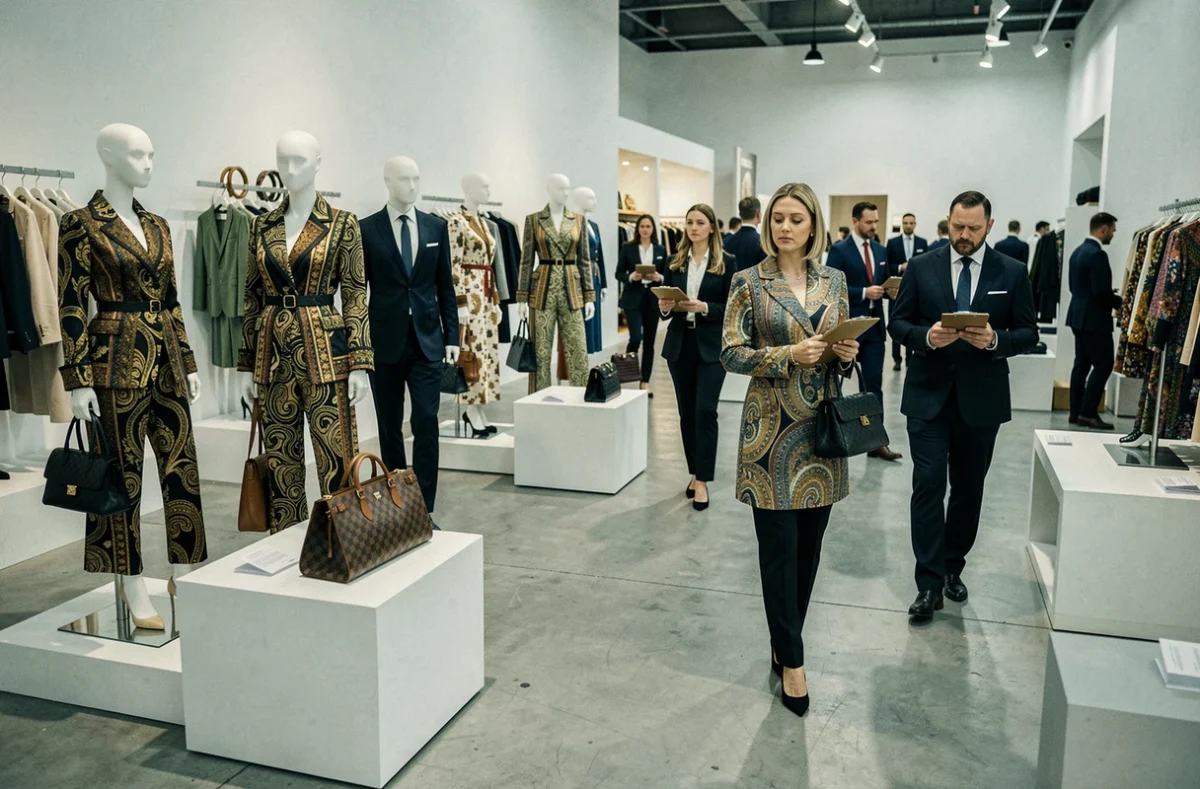
Feedback from the ground has been mixed. The new collections are seen as lacking originality. The redesigned Milan store has been described as cold and impersonal. The creative transition has yet to deliver visual codes strong enough to recreate the excitement that defined the Michele era.
The underlying problem is timing. A luxury fashion house can weather a creative transition if its commercial foundations remain solid. When footfall is falling, the Chinese market is contracting and competitors—led by LVMH—keep up the pressure, every season without tangible creative results accelerates the erosion.
Gucci versus LVMH: the gap in global luxury keeps widening
Comparisons with Bernard Arnault’s group have become a painful exercise for Kering. LVMH has a broad enough brand portfolio that one fashion house’s underperformance does not put the whole group at risk. François-Henri Pinault does not have that safety net.
Meanwhile, Gucci’s direct competitors in the accessible luxury and upper-premium segment have not stood still. Brands that have maintained a coherent narrative and an impeccable customer experience are winning over the customers Gucci is losing. The luxury market has not collapsed overall; it has been redistributed.
- Kering is no longer highlighting a near-term return to group growth, preferring to emphasize margin protection
- The sale of real estate assets shows that the priority is to generate cash, not invest in expansion
Gucci’s recovery is not impossible, but it requires creative direction, local commerce and distribution strategy to come together. For now, each lever is moving at its own pace, and that very disconnect is preventing the brand from regaining its luster.