Are you preparing a motorcycle road trip to Spain and wondering what the law requires in terms of equipment? Spanish regulations go beyond just the helmet. In recent years, the DGT (General Directorate of Traffic) has tightened its controls on several pieces of equipment, and penalties can ruin a trip.
CE-certified gloves in Spain: the next obligation to anticipate
In France, CE-approved gloves have been mandatory for several years. In Spain, the situation is evolving in the same direction, but at a different pace.
The DGT has initiated a review of its standards for motorcycle gloves. The goal: to make CE-certified gloves according to the EN 13594 standard mandatory for both the rider and the passenger. Official campaigns called “Tus guantes, tu seguro” accompany this regulatory tightening.
Specifically, even though the formal obligation is not yet set in stone at the time you read this, road checks already include glove verification during special operations. A detail to know before you leave, because as detailed by the mandatory motorcycle equipment in Spain according to Terres d’envies, the trend is clearly towards strengthening requirements.
Why wait for the law to be passed to equip yourself? Because a Guardia Civil de Tráfico officer who notices the absence of gloves during a heightened check can already issue a ticket for insufficient safety of the rider. It’s better to slip a pair of approved gloves into your bag than to negotiate roadside.
Approved helmet in Spain: what “correct use” really means
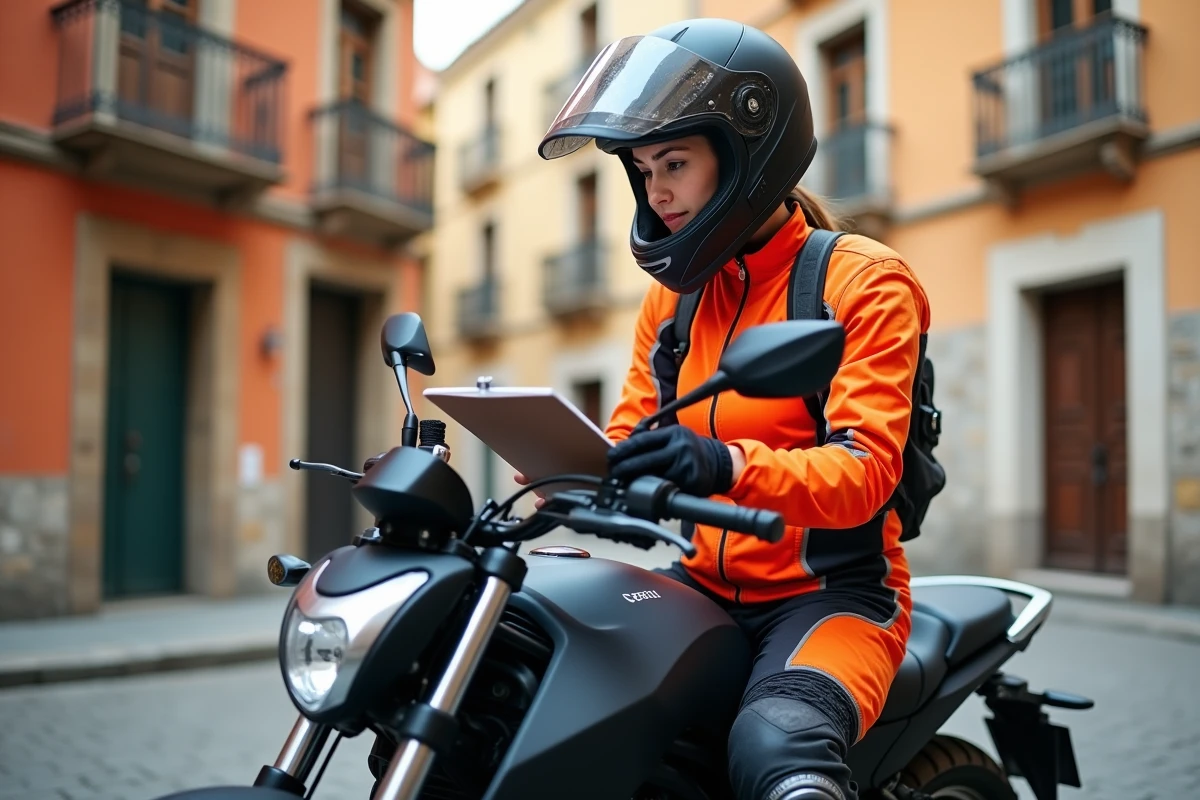
The helmet is mandatory in Spain, no one doubts that. What surprises French motorcyclists more is the strict interpretation that the Spanish police make of the notion of correct use of the helmet.
In recent years, the Guardia Civil de Tráfico has explicitly sanctioned the following situations:
- A jet helmet worn without a screen or visor down, considered incorrect use even if the helmet itself is approved.
- A communication system (intercom, camera) poorly attached or protruding from the helmet’s profile, reclassified as alteration of the approval.
- An approved helmet according to an old standard (prior to R22.05, then gradually to R22.06) may be refused during a check.
These penalties are documented in the reports of the “Semana Santa” and “Operación Verano” operations, the two major annual campaigns for enhanced control on Spanish roads.
Which helmet to choose to ride in Spain without risk
Opt for a full-face or modular helmet approved ECE 22.06. This standard is the most recent and poses no problems during checks. If you ride with a jet helmet, ensure it has an integrated screen and that your intercom is attached according to the manufacturer’s recommendations.
A helmet approved in France is also approved in Spain (common European CE marking). The difficulty does not come from the approval itself, but from how you wear the helmet.
License plate and vest: the pitfalls of road checks
Beyond personal protection, Spanish regulations impose obligations related to the vehicle itself that many travelers overlook.
The license plate must be perfectly legible, clean, and not obscured by a luggage rack or modified wheel arch. Spanish officers pay particular attention to this point, especially on foreign motorcycles. A top case or saddlebag support that partially covers the plate is enough to trigger a fine.
Reflective vest: mandatory in case of emergency stop
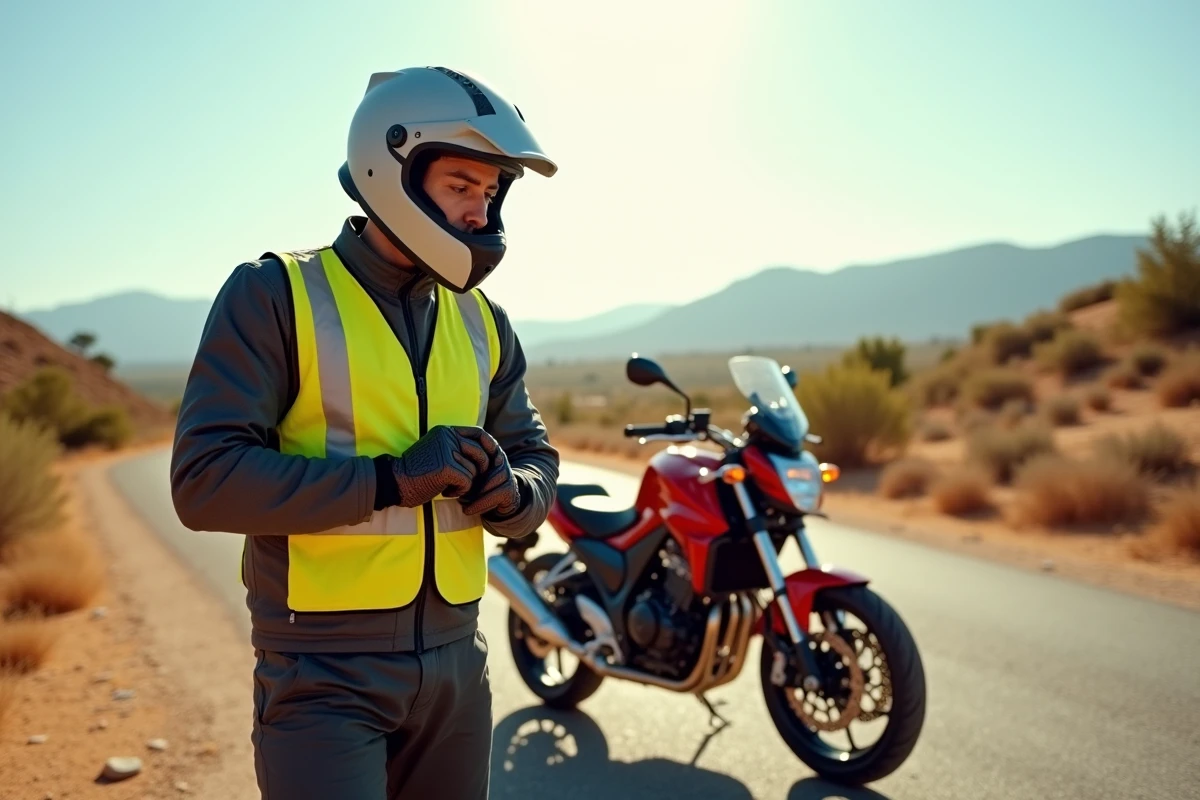
You are not required to wear a high-visibility vest while riding. However, a reflective vest approved must be accessible (not at the bottom of a suitcase) and worn as soon as you get off the motorcycle on the side of the road, whether for a breakdown or a simple stop on the emergency lane.
This rule also applies to the passenger. Two people on the motorcycle means two vests within reach.
Motorcycle and scooter rental in the city: often ignored requirements
Planning to rent a scooter in Barcelona, Madrid, or Valencia to explore the city? In recent years, these municipalities have imposed stricter requirements on rental and bike-sharing operators.
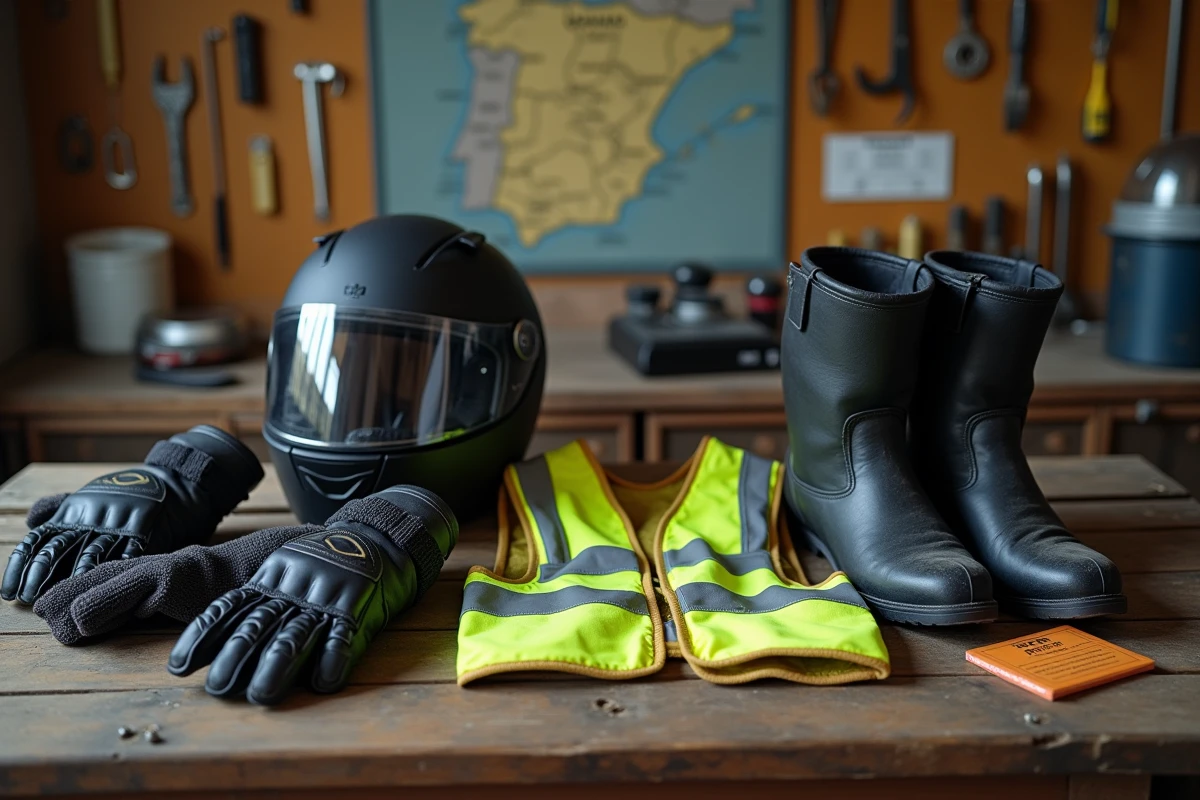
Renters must provide at least one approved helmet per passenger. Some cities go further and require information campaigns on wearing gloves and reinforced jackets at the time of vehicle handover.
In practice, the quality of the equipment provided varies greatly from one operator to another. A “courtesy” helmet available for free does not offer the same level of protection as a well-fitted personal helmet. If you plan to ride regularly during your stay, bring your own gear.
Summary of equipment to prepare before departure
- Approved ECE 22.06 helmet (or 22.05 minimum), worn correctly with the screen in place and intercom attached according to the manufacturer’s standards.
- CE-certified gloves (EN 13594 standard) for the rider and passenger, even if the formal obligation is still being finalized.
- Immediately accessible reflective vest, one per person on the motorcycle.
- Clear and legible license plate, not obscured by accessories or luggage.
- Valid driving license (category A corresponding to the engine size) and up-to-date vehicle documents.
Spanish regulations on motorcycle equipment are evolving rapidly, and the trend is always towards strengthening. Preparing your equipment before crossing the border remains the safest way to avoid a nasty surprise during a Guardia Civil check.